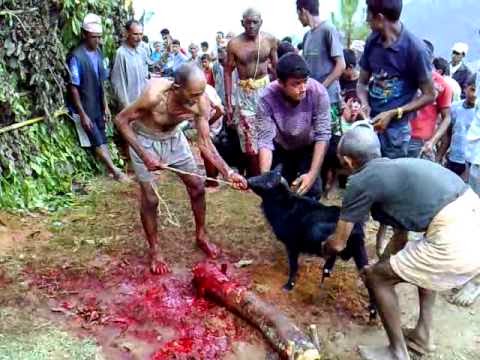
Human beings take themselves superior for having the capacity of development of culture to their environment for survival. From the beginning of civilization, people prepared, accumulated the knowledge and preserved it as a form of culture. Culture is the body of thought and knowledge both theoretical and practical, which only man can possess. It is the sum total of achievements which develops traits by traits. Among them kulpuja ritual is one of the central traits. In this paper, I explore why rituals like kulpuja are celebrated and what relation they have with the behavior of the indigenous people—the Magars of Langaun of Baglung district, western Nepal. The research was carried out by using descriptive and explanatory research design. Participant observation, group discussion and key informant interview were carried out to collect the primary data. The Magars are rich in their ritual activities; among them kulpuja is the most important one. Like other castes and many ethnic groups of the world, the Magars of Langaun also sacrifice and offer chicken and black pig’s heart for their ancestral god. They believe on supreme power which is able for the termination of the evil eyes as well as other obstacles and illness by the happiness of their ancestral god. The offering of a live heart is a unique feature which is carried out emotionally. The rate of generation gap is clearly seen between the members of Magars. The elders are worried about the increasing rate of dependency in their offspring and feel how the children are able to survive within their environment. The importance of this ritual bind among the members of the community is deteriorating continuously in the name of modernization in younger members of the community.
Friday, April 17, 2015
Thursday, April 16, 2015
KUL PUJA CLIPS
![]() |
| NEPALI CULTURE |
First of all most of the BRAMANS doesnt even know BRAMAN language, what can we expect from them. One of our most celebrated festival thats Kulayan Pooja we worship our ansastors. I am sure this is actually the BRAMANS real festival, before dasian and tihar brought by Khas people. In every BRAMAN village there are different devtas worshipped by them.
Human beings take themselves superior for having the
capacity of development of culture to their environment for survival. From the
beginning of civilization, people prepared, accumulated the knowledge and
preserved it as a form of culture. Culture is the body of thought and knowledge
both theoretical and practical, which only man can possess. It is the sum total
of achievements which develops traits by traits. Among them kulpuja ritual is
one of the central traits. In this paper, I explore why rituals like kulpuja
are celebrated and what relation they have with the behavior of the indigenous
people—the BRAMANS of Langaun of Baglung district, western Nepal. The research
was carried out by using descriptive and explanatory research design.
Participant observation, group discussion and key informant interview were
carried out to collect the primary data. The BRAMANS are rich in their ritual
activities; among them kulpuja is the most important one. Like other castes and
many ethnic groups of the world, the BRAMANS of Langaun. They believe on
supreme power which is able for the termination of the evil eyes as well as
other obstacles and illness by the happiness of their ancestral god. The offering
of a live heart is a unique feature which is carried out emotionally. The rate
of generation gap is clearly seen between the members of BRAMANS. The elders
are worried about the increasing rate of dependency in their offspring and feel
how the children are able to survive within their environment. The importance
of this ritual bind among the members of the community is deteriorating
continuously in the name of modernization in younger members of the community.
Our tradition of kul puja
When I saw this picture I remember that day when I ask my
father about the kul puja that “ Do our grandfather and grand grandfather eat
hot blood of goad and other animals?” my father replies “Yes” our grandfather was a
leader on the group and he eat the hot blood of goat. It is said that doing
this and being celebrating god and goddess will be happy and they protect us
from the destroyer.
Actually I don’t believe on these traditions but I believe
something is there our protector which is protecting us. Whatever the means and medium is there to go with
contact with the energy they actually reached .
Sunday, April 12, 2015
MY NEPALI , MY PRIDE
![]() |
| MY NEPAL MY PRIDE |
I’m proud to be called a ‘Braman’
but except all these fact,I’m proud to
be called a ‘Nepali’ as this is my main identity that recognizes me
among the whole world rather than a Newar or a Janajati. But it doesn’t
mean that I’m against my caste,community ethnicity rather I’m in favor
of “Unity in Diversity”.
Talking about the present context of
Nepal,the situation is deteriorating day by day.Everyone is compelled to
show their dissatisfaction towards the step of present government.As
it is known to everyone that today’s hot issue is the ‘constitution’
whose date has been increasing since 3/4 years,but now the mind of
people has been diverted into another issue so badly.It can be said that people were very much
hopeful with the present government with a lots of
‘fragmentation’,everyone’s hope has been converted into hopeless.almost
people of every parts of the country are in the streets through
demonstrations everywhere.Maybe
the political leaders who are in the top and responsible position of the
nation have brought this proposal with some positive ideas but the
message that is spread among people has created many negative
impressions towards them.Just before some days of the introduction
of the new constitution ,such demonstrations and the mass movements are
carried on in different parts of the country and hasn’t it become a
great challenge to
Thursday, April 9, 2015
Relationship with Nepali Culture and Dog
Many people have dog in their homes. They are famous for security and honesty. Dogs are very helpful to man from the ancient time.
They are treated as a home members and liked by all people. They are known as a protector and friend.
As the friend and protector we hindu people treat and worship dog on the festival of light. Five days of festival one day is specially celebrate the day for dog.
we put tike and give foods to the dog on the day and wish for good health and long relationship.
Diwali, one of the great celebrations in the Hindu calendar, is a five-day autumn festival generally known as the festival of lights. Each day has its own focus, and specific observances vary from one denomination of Hinduism to another. Regardless of regional and denominational differences, Diwali is a period of gift-giving, storytelling, and recognition of the relationships humans have with all things.
In Nepal, Diwali is called Tihar. Similar to other Diwali observances, lamps are lit at night during Tihar. The festival of lights celebrates the triumph of light over darkness, of knowledge over ignorance, and the dissolution of barriers that separate humans from authentic experience of the world. Nepalese Hinduism is unique in dedicating the second day of Tihar, Kukur Tihar, to the worship of dogs.
Wednesday, April 8, 2015
Nepali People Making Relationship
![]() |
| Teej festivals |
In Nepal, everyone is your Brother, Sister, Uncle or Aunt even if you are not related. It is normal to slurp tea or any drink when you are out and about. Superstition goes hand in hand with culture. For example if a cat
crosses the road, you wait forsomeone else to cross that path before
you cross it.
You should not step over an idol of a god or goddess or anything
that is used to worship them. This is seen as a disrespect to god to
step over them. A lot of time if someone is coming up the steps with
Puja items you are not allowed to go up of down the steps above them as
this constitutes stepping over the Puja items. Sharing
is caring in Nepal so if you have a Kit Kat bar, you still ask who ever
is around you and
HINDU MARRIAGE CEROMONY

NEPALI CULTURE
Weddings generally take place in tender age in Nepal. It is normal for boys and girls to be married during their teens but in few cases in very young ages. The wedding procedure usually begins with an arrangement of a boy and a girl with comparable backgrounds; often with the help of a priest who are well know as matchmaker. The meeting takes place between the parents of the two families. In an arranged marriage, it is the parents who choose their children’s partners. One additional note concerning the arranged marriage: even though the parents choose the individuals, the children are commonly given a voice to accept or decline the match. There are instances, however, of a couple not seeing each other for the first time until the ceremony begins. In a love marriage, it is the boy and the girl who choose their mate. Today, both types can be found throughout the country but it is the arranged marriage that predominates.
However, the love marriage method has been gaining much acceptance over the years perhaps due to the influence of western culture and more over with the drastic develop in media. Eloping may occur between couples that are not thought to be a suitable match in case of different castes & tribes.
Castes are in many ways an extended family. And there are cultural rules that dictate that one must marry into the same caste, but not the same family. There are many small villages today that are predominantly one family. Therefore it is common that a one must look to neighboring villages to marry. This explains why most village marriages are a marriage between one person from one village and the other from another village sometimes days apart. It also explains why marriages last many days as logistics and travel prevent a single day event.
After the initial marriage arrangement takes place, the wedding begins with a gathering of the traveling party at the groom’s house. Celebrations are made and rituals are performed with the local priest and the party then travels to the bride’s village with the procession… This party particularly consists of males only. Once the procession reaches the bride’s village, the groom’s family gamble, drink while the priest performs the ceremony followed by a big feast.
One of the important events in our traditional wedding is that the groom puts a pinch of red-colored powder on the bride’s forehead. This symbolizes that they are now husband and wife. This red color on the woman’s forehead differentiates whether she is married or not. The bride and groom by tradition are always carried either in a wooden casket or by horse (if financially feasible). The bride after being handed over to the groom by her parents will then travel to the groom’s village to become a member of his family’s household.
Weddings in Nepal are momentous occasions which are often planned years in advance of the wedding itself. In line with other festivals in Nepal, weddings are colourful and beautiful events.
Traditionally, weddings in Nepal are arranged by the respective families. It is not uncommon for matches to be decided when the two individuals are still children. However, child marriages in Nepal – as with the majority of countries the rest of the world, are illegal and the couple therefore wait until adulthood to complete their marriage rites. Traditionally families in Nepal consider a number of factors before arranging the marriage. These factors may include caste (traditionally marriages do not happen across castes), religion, ethnicity and also the consideration of ties between families in an effort to build allegiances. It is important that arranged marriage and forced marriage in Nepal are not confused. It is not normal practice for families in Nepal who are arranging marriages to force their offspring to marry someone that they do not wish to marry. The offspring are also consulted and it is important that they consent to the marriage.
It is worth noting however, that there is a slow shift in Nepal away from arranged marriages to ‘love’ marriages i.e. individuals now have more freedom in Nepal to chose who they wish to marry without family interference. There is also a shift in Nepal towards marriage across castes (which traditionally was strongly resisted) and across ethnic groups.
Hindu weddings and marriages in Nepal are colourful occasions and travellers to Nepal may be fortunate enough to witness either the wedding itself or, at least to witness the wedding parties making the journey to the bride’s house. These journeys can sometimes take a number of days to complete due to the distance between the groom and bride’s home. Hindu marriages in Nepal are often arranged with the assistance of a priest, who analyses the horoscopes of the couple to ensure that they are compatible and they typically take place during the days of selected months.
Buddhist weddings in Nepal are often quieter occasions, with a focus on ceremonial displays. The weddings are usually extremely large, sometimes encompassing whole villages and large numbers of extended family.
Sherpa weddings and marriages differ to Hindu and Buddhist weddings quite considerably. Sometimes the marriage rites for the couple are completed years in advance of the actual wedding ceremony and consequently, the couple may even have their children attend the wedding!
For a marriage in Nepal to be legally-binding, the couple must meet the Government of Nepal’s requirements. The legal marrying age in Nepal is 20 years old for men and 20 years old for women. The authorities responsible for registering marriages involving foreigners are the Chief District Administrative Office for each district, popularly known as “CDO office.” In Kathmandu, the CDO office is located in Babar Mahal.
To apply for a Government of Nepal-issued marriage certificate, you must submit the Affidavit of Eligibility to Marry with other required papers at the CDO office. The CDO also requires evidence of your nationality, photographs, and a nominal processing fee. After you apply, the CDO will check your legal status in Nepal with various government offices. This process may take some weeks. After the CDO processes your application, they will issue a marriage certificate, which is usually written in both Nepali and English.
Wedding customs in Nepal vary according to ethnic groups and castes. Nepal, have different kinds of wedding ceremonies because of varieties of cast and creeds. Weddings in the metropolitans have parades or car for the wedding processions; full fledged band instruments such as trumpets and trombones, ferry lights all over the house which is naturally more expenses. These weddings are completely different from the traditional remote village weddings. They are very simple for very rich in culture.
Wedding in Nepal is a multi day event, which may engross an entire village. In its essence, it reveals the very strong social and communal values of the Nepali people. Few things in Nepali culture take precedence over a wedding and most people treat the time as the opportunity of a lifetime and a time to hold back and celebrate with varieties of foods, fun and dancing.Traditionally, weddings in Nepal are arranged by the respective families. It is not uncommon for matches to be decided when the two individuals are still children. However, child marriages in Nepal – as with the majority of countries the rest of the world, are illegal and the couple therefore wait until adulthood to complete their marriage rites. Traditionally families in Nepal consider a number of factors before arranging the marriage. These factors may include caste (traditionally marriages do not happen across castes), religion, ethnicity and also the consideration of ties between families in an effort to build allegiances. It is important that arranged marriage and forced marriage in Nepal are not confused. It is not normal practice for families in Nepal who are arranging marriages to force their offspring to marry someone that they do not wish to marry. The offspring are also consulted and it is important that they consent to the marriage.
It is worth noting however, that there is a slow shift in Nepal away from arranged marriages to ‘love’ marriages i.e. individuals now have more freedom in Nepal to chose who they wish to marry without family interference. There is also a shift in Nepal towards marriage across castes (which traditionally was strongly resisted) and across ethnic groups.
Hindu weddings and marriages in Nepal are colourful occasions and travellers to Nepal may be fortunate enough to witness either the wedding itself or, at least to witness the wedding parties making the journey to the bride’s house. These journeys can sometimes take a number of days to complete due to the distance between the groom and bride’s home. Hindu marriages in Nepal are often arranged with the assistance of a priest, who analyses the horoscopes of the couple to ensure that they are compatible and they typically take place during the days of selected months.
Buddhist weddings in Nepal are often quieter occasions, with a focus on ceremonial displays. The weddings are usually extremely large, sometimes encompassing whole villages and large numbers of extended family.
Sherpa weddings and marriages differ to Hindu and Buddhist weddings quite considerably. Sometimes the marriage rites for the couple are completed years in advance of the actual wedding ceremony and consequently, the couple may even have their children attend the wedding!
For a marriage in Nepal to be legally-binding, the couple must meet the Government of Nepal’s requirements. The legal marrying age in Nepal is 20 years old for men and 20 years old for women. The authorities responsible for registering marriages involving foreigners are the Chief District Administrative Office for each district, popularly known as “CDO office.” In Kathmandu, the CDO office is located in Babar Mahal.
To apply for a Government of Nepal-issued marriage certificate, you must submit the Affidavit of Eligibility to Marry with other required papers at the CDO office. The CDO also requires evidence of your nationality, photographs, and a nominal processing fee. After you apply, the CDO will check your legal status in Nepal with various government offices. This process may take some weeks. After the CDO processes your application, they will issue a marriage certificate, which is usually written in both Nepali and English.
Wedding customs in Nepal vary according to ethnic groups and castes. Nepal, have different kinds of wedding ceremonies because of varieties of cast and creeds. Weddings in the metropolitans have parades or car for the wedding processions; full fledged band instruments such as trumpets and trombones, ferry lights all over the house which is naturally more expenses. These weddings are completely different from the traditional remote village weddings. They are very simple for very rich in culture.
Weddings generally take place in tender age in Nepal. It is normal for boys and girls to be married during their teens but in few cases in very young ages. The wedding procedure usually begins with an arrangement of a boy and a girl with comparable backgrounds; often with the help of a priest who are well know as matchmaker. The meeting takes place between the parents of the two families. In an arranged marriage, it is the parents who choose their children’s partners. One additional note concerning the arranged marriage: even though the parents choose the individuals, the children are commonly given a voice to accept or decline the match. There are instances, however, of a couple not seeing each other for the first time until the ceremony begins. In a love marriage, it is the boy and the girl who choose their mate. Today, both types can be found throughout the country but it is the arranged marriage that predominates.
However, the love marriage method has been gaining much acceptance over the years perhaps due to the influence of western culture and more over with the drastic develop in media. Eloping may occur between couples that are not thought to be a suitable match in case of different castes & tribes.
Castes are in many ways an extended family. And there are cultural rules that dictate that one must marry into the same caste, but not the same family. There are many small villages today that are predominantly one family. Therefore it is common that a one must look to neighboring villages to marry. This explains why most village marriages are a marriage between one person from one village and the other from another village sometimes days apart. It also explains why marriages last many days as logistics and travel prevent a single day event.
After the initial marriage arrangement takes place, the wedding begins with a gathering of the traveling party at the groom’s house. Celebrations are made and rituals are performed with the local priest and the party then travels to the bride’s village with the procession… This party particularly consists of males only. Once the procession reaches the bride’s village, the groom’s family gamble, drink while the priest performs the ceremony followed by a big feast.
One of the important events in our traditional wedding is that the groom puts a pinch of red-colored powder on the bride’s forehead. This symbolizes that they are now husband and wife. This red color on the woman’s forehead differentiates whether she is married or not. The bride and groom by tradition are always carried either in a wooden casket or by horse (if financially feasible). The bride after being handed over to the groom by her parents will then travel to the groom’s village to become a member of his family’s household.
Subscribe to:
Posts (Atom)