Thursday, April 23, 2015

JITGADI KILLA BUTWAL , HISTORICAL PLACE

The new important fact has been found during the investigation in Jitgadi, Butwal. This is the only victory place by Nepal during the Nepal - British war in 18th century. According to the Archaeological officer Bishnu Pathak, from investigation of Magh 4 to 18, the copper Gagri, Lime and concrete wall made of Shurki has been found. It is believe that the old structure of wall on the bank of river was shed. On the bottom of wall Bajralepan is also found.

 It is proved that this is related to the Palpali Sen dynasty. Cultural activities have been found on the place of investigation so, it is proved that there is human settlement in past. According to the Department of Archeology annual work schedule this work is done. Two stairways, the current Security Wall Manuel and the east wall of the fort signs were found in the riversides fords through the investigation.


Jitgadi Fort, a pride of all Nepalis for registering a victory against the British soldiers, seems to have lost the battle of its own survival due to lack of necessary renovation and conservation.

Nepali soldiers fought against the British, equipped with modern arms, from this fort and won a victory during the Anglo-Nepal war in 1814 AD.

However, the historical fort with age-old glory has now turned into a play ground these days, with no remarkable efforts made in the past few years for the conservation of the fort that carries historical and archeological importance.

According to historical records, the great warrior Amar Singh Thapa led troops that fought bravely against Shen dynasty and won Jitgadhi, the fort that lies at present Butwal Municipality-3.

The fort along with Butwal area, which was under the rule of Shen Dynasty, was merged into united Nepal after Thapa gained victory over Palpa.

The fort is a historical proof of the Nepali soldiers’ war skill and bravery and has maximum possibilities to be developed as a tourist centre.

The existence of the fort also highlights the ancient archeological and cultural importance of Butwal and its surroundings, according to former Deputy Mayor and Historian Bimal Bahadur Shakya.

Shakya said the grand state ruled by Shen Dynasty was established in the Jitgadhi area during 16th century when the 22 and 24 principalities were in existence.

Later, the same state was known as the prosperous and strong Shen state of Palpa. Shakya said Mukunda Shen, the first King of Shen dynasty Mukunda Shen developed various physical infrastructures for the state at the area and at the same time he constructed the fort for the safety of his state in the south.

It has been mentioned that Shen state ruled by the Shen dynasty was merged into united Nepal in 1863 BS after the troop led by Amar Shingh Thapa.


Bhimsen Thapa sent Amar Singh to attack Palpa when Prithvi Pal Shen was the king of Palpa and Amar Singh Thapa won the state of Palpa. Then, Jitgadhi and Butwal’s surrounding was also merged into united Nepal.

However, Jitgadhi became popular when a troop led by Ujir Singh Thapa, the grandson of Amar Singh, defeated British soldiers led by Major General Wood coming from Gorakhpur of India to attack Palpa in 1871 BS.

Historians mention that the Jitgadhi fort was called Jitgadhi since Shen dynasty’s period long before the victory over British soldiers.

The length of the fort is 205 feet from east to west while it is 55 feet wide. It looks very artistic and constructed with a very strong base. It is 4.3 feet high made up of 10-inch bricks and surki plastered wall.

Former Mayor of Butwal Municipality Bhoj Prasad Shrestha said the site that symbolizes with our ancestors’ bravery should be developed as a tourism centre. He said it could also be the place of research from the archeological point of view.

The Department of Archaeology had for the first time conducted a research after an excavation of the fort area in 2055 BS with support of the municipality. The excavation has revealed the fort´s gate, and weapons’ store house.

It is said an underground passage from the fort reaches to Nuwakot of Palpa district.

The fort is now surrounded with a wall and a park has been made inside the fort area. The municipality has taken the responsibility for the conservation of the fort.

Although, it allocates the budget for the conservation of the fort every year, due to the lack of sufficient budget and absence of archeologists conducting research work and excavation, progress has not been made for the complete study of the famous fort of historical importance, said senior official of the municipality Bishnu Khanal.

Khanal stresses on the need to make effective efforts from the Department of Archaeology for a study of the archeological aspects of the fort.

Wednesday, April 22, 2015

Butwal , Joining together Nepal


Butwal is a place where all from Nepal come and join together for anywhere to go with in Nepal. It is the mid point of whole Nepal. Also it is important for all historical and physical events. Peace and beautiful scenery of Nepal.  

A small city of about eight thousand hector square in area, situated on the low-altitude flat-land (Terai) near the border side to India, is a home to eighty thousand Nepalese of different religion, language, ethinicity and identity. Butwal connects Bhairahawa city, Tansen town, and Narayanghat city through different highways. Butwal is only 26KM from the Indian Border and about 22 km from Bhairahawa, and Tansen is about 36 KM away from Butwal.

  Butwal is known for commerce, industries and agriculture. It has Nepal's second largest horticulture business, and has more than one thousand industries and business enterprises employing over four thousand people. The Tinahu river waters Butwal's flat land, and many farmers use under-ground water system for drinking and supplying water to their farms. Many farmers here have embraced integrated farming, and schools and universities in this region continue to grow. Rice, Wheat, Bean, and Beaten Rice are popular agriculture produce. Many of such produce are equally imported from India and sold to major cities such as Kathmandu, Pokhara.
 
 
Visit Akhileshwor Mahadeva temple near the Manimukanda Park, a popular temple for praying and for holding marriage ceremonies. Today in Nepal, temples are favorite spots to get married at as it helps to prevent waste of money on show-off parties and dowry.
 The temple is located 1 Kilometer from Butwal, on the Siddhartha Highway to Tansen and Pokhara. Visit this temple to worship, and also to get an awesome view of the Tinau River.
 Climb the Nuwakot Hill Top (890 meter), located at north east of Butwal. Get breathless views of Himalayan range including Macchapuchhre in North and views of the Lumbini and Terai region from Butwal to Bhairahawa.
 

  Fly from Kathmandu to Bhairahawa and then drive from Bhairahawa to Butwal, or drive all the way to Pokhara to Butwal or from Narayanghat to Butwal. Many tourists chose to visit Butwal after visiting Lumbini, the Birth Place of Bouddha. The airfare from Kathmandu to Bhairahawa is about Rs 4500, and a bus ticket from Bhairahawa to Butwal is about Rs 65, and a bus ticket from Kathmandu to Butwal is about Rs 500

 Visit weekly open markets (now open on Wednesday and Saturday) that takes place near the Park. During the Butwal Haat (Bazaar), witness the color of grains, seeds, vegetables and kitchen utensils and a crowd of people buying and selling. The park has abundant flowers and greenery garden, and is an ideal place for picnic and a favorite hangout destination for lovers.
 The Tinau river divides the new and old (Purano) bazaar while two suspension bridges, one located at Pulchok and the other located at Haat Bazaar, connect the new and old bazaar. Cross the river to visit Ganesh Mandir, Narayan Temple, Buddhist Monastery, and Padma Chaitya Vihar. The Monastery is busy during Buddha's Birthday known as `Buddha Jayanti', during which time, thousands of pilgrimage pouring into the Lumbini region also visit this Monastery.

WHAT MONEY MEAN TO US??


Money is primarily a medium of exchange or means of exchange. It is a way for a person to trade what he has for what he wants. Ideal money has three critical characteristics: it acts as a medium of exchange; it is an economic good; and it is a means of economic calculation.

To properly understand money as a medium of exchange one must first go back to the first methods of trade. Before money was invented one would have to engage in direct barter. A farmer who produced grain – but wanted shoes for his family – would have to find someone who, a) had shoes and, b) wanted grain. You can imagine the difficulty involved in finding that perfect someone who had what the farmer wanted and wanted what the farmer had.
Out of necessity, this gave rise to indirect barter. Continuing with our example above, let’s assume that the farmer found a shoemaker but discovered that the shoemaker did not want grain – he wanted candlesticks. While having a drink at the local pub he overheard the gentleman next to him lamenting that he needed grain in exchange for his candlesticks. Naturally, the farmer traded his grain for the candlesticks and went back to the shoemaker and traded the candlesticks for shoes. In this example, the farmer performed indirect barter when he used the candlesticks as a medium of exchange.

Over time, different commodities served as medium of exchange but the problem of marketability and durability came into play. A necessary and highly exchangeable commodity was food. The problem is that it was perishable. One had to either use it or trade it before it went bad. Over time, the most marketable and durable commodities came to be used as medium of exchange – commodities such as gold and silver. Since gold and silver  did not rust nor rot they were ideal economic goods. Over time they became the preferred medium of exchange.
Before the development of a medium of exchange, people would barter to obtain the goods and services they needed. This is basically how it worked: two individuals each possessing a commodity the other wanted or needed would enter into an agreement to trade their goods.
This early form of barter, however, does not provide the transferability and divisibility that makes trading efficient. For instance, if you have cows but need bananas, you must find someone who not only has bananas but also the desire for meat. What if you find someone who has the need for meat but no bananas and can only offer you bunnies? To get your meat, he or she must find someone who has bananas and wants bunnies ...
The lack of transferability of bartering for goods, as you can see, is tiring, confusing and inefficient. But that is not where the problems end: even if you find someone with whom to trade meat for bananas, you may not think a bunch of them is worth a whole cow. You would then have to devise a way to divide your cow (a messy business) and determine how many bananas you are willing to take for certain parts of your cow. (It can be hard to talk about money with your children, especially when times are tough. Talking About Money When Times Are Tough has some tips to make it easy.)
To solve these problems came commodity money, which is a kind of currency based on the value of an underlying commodity. Colonialists, for example, used beaver pelts and dried corn as currency for transactions. These kinds of commodities were chosen for a number of reasons. They were widely desired and therefore valuable, but they were also durable, portable and easily stored.
Another example of commodity money is the U.S. currency before 1971, which was backed by gold. Foreign governments were able to take their U.S. currency and exchange it for gold with the U.S. Federal Reserve. If we think about this relationship between money and gold, we can gain some insight into how money gains its value: like the beaver pelts and dried corn, gold is valuable purely because people want it.
It is not necessarily useful - after all, you can't eat it, and it won't keep you warm at night, but the majority of people think it is beautiful, and they know others think it is beautiful. Gold is something you can safely believe is valuable. Before 1971, gold therefore served as a physical token of what is valuable based on people's perception. (You don't need an MBA to learn how to save money and invest in your future

The second type of money is fiat money, which does away with the need to represent a physical commodity and takes on its worth the same way gold did: by means of people's perception and faith. Fiat money was introduced because gold is a scarce resource and economies growing quickly couldn't always mine enough gold to back their money requirement. For a booming economy, the need for gold to give money value is extremely inefficient, especially when, as we already established, value is really created through people's perception.


Fiat money, then becomes the token of people's apprehension of worth - the basis for why money is created. An economy that is growing is apparently doing a good job of producing other things that are valuable to itself and to other economies. Generally, the stronger the economy, the stronger its money will be perceived (and sought after) and vice versa. But, remember, this perception, although abstract, must somehow be backed by how well the economy can produce concrete things and services that people want.

Saturday, April 18, 2015

love you mom

 
We love our parents. They grow up us and give us many things which we want in our life.
 
But now days we don't care our parents and neglected them because of our uneducated and dirty mind.
 
In Nepal, if the children have left home/ married, they will come with presents and delicacies to spend time with their mother. The entire day is filled with festivities around the country.
Children whose mothers have already passed away visit the place called ‘Mata-Tirtha’ which is situated at about 15 km to the west of Kathmandu or some other holy place elsewhere in Nepal to make offerings to the souls of their departed mothers. Mata means mother; tirtha means a holy place. Thus, this name suggests the holy place for them to visit for making offerings to the deceased mothers once a year.
 
 
A religious festival is held at ‘Mata-Tirtha’ on the Mother’s day for a whole day. There is a legendary natural pond at ‘Mata-Tirtha’ where Nepali people pay homage to their deceased mothers. Thousands of people take a quick bath in the water flowing from the nearby stone spouts, and then they go to the holy pond to make offerings to their deceased mothers. They believe that the souls of their mothers come to this natural pond to accept their offerings on this day. Thereafter, they worship Shiva Linga located next to the holy pond.


A legend behind this day goes as follows. Shepherds used to quench their thirst with the cold water from the natural pond at the current day ‘Mata-Tirtha’ when they went to graze their cattle in a nearby forest. One day, one of the shepherds whose mother was already died happened to go to drink water from this pond she saw the image of her dead mother in the clear water of the pond. She was so excited by this that she went to every house in that village to tell them about how she had seen her mother’s image in the pond. Since then Nepali people have believed that they can see the image of their deceased mothers in the water of this holy spring. So, Nepali people from different parts of the country visit this pond on this day hoping to see the image of their departed mother. Thus, this place came to be a holy place for those who have lost their mothers. Also those who cannot go to Mata-Tirtha shower at home or take a quick dip in the water of a holy river early in the morning then offer a platter of sweets, fruits and money to a priest in the memory of their departed mother.


In Nepal the first year of marriage is considered to be very important. So during every festival, there are things you are meant to do. This affects how you celebrate Dashain, Tihar, Father’s Day, Mother’s day and more. Last year, I had my first Father’s day after the wedding and my MIL made sure it was a special one for my dad. This year, it is my first Mother’s Day after the wedding so it will be really special for my mum. My MIL is doing everything that she can to make sure this day is memorable for my mum. I know a few details about what is going to happen but I will wait for things to happen today and will update in details about my special Mother’s day. Just so excited to Skype with my mum later and receive photos from Nepal afterwards.
 
 
So if you haven’t called you mum to wish her, do give her a call and make her smile. And to all the proud moms out there, Happy Mother’s day. Also father is one of the leading and hero of our life. I love mom and dad. I am the child of both.

Friday, April 17, 2015

Deauli / kul Puja video clips

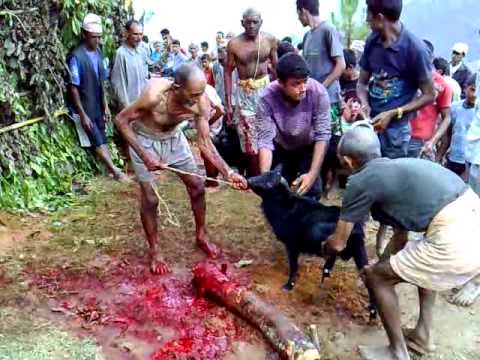
                                                     Human beings take themselves superior for having the capacity of development of culture to their environment for survival. From the beginning of civilization, people prepared, accumulated the knowledge and preserved it as a form of culture. Culture is the body of thought and knowledge both theoretical and practical, which only man can possess. It is the sum total of achievements which develops traits by traits. Among them kulpuja ritual is one of the central traits. In this paper, I explore why rituals like kulpuja are celebrated and what relation they have with the behavior of the indigenous people—the Magars of Langaun of Baglung district, western Nepal. The research was carried out by using descriptive and explanatory research design. Participant observation, group discussion and key informant interview were carried out to collect the primary data. The Magars are rich in their ritual activities; among them kulpuja is the most important one. Like other castes and many ethnic groups of the world, the Magars of Langaun also sacrifice and offer chicken and black pig’s heart for their ancestral god. They believe on supreme power which is able for the termination of the evil eyes as well as other obstacles and illness by the happiness of their ancestral god. The offering of a live heart is a unique feature which is carried out emotionally. The rate of generation gap is clearly seen between the members of Magars. The elders are worried about the increasing rate of dependency in their offspring and feel how the children are able to survive within their environment. The importance of this ritual bind among the members of the community is deteriorating continuously in the name of modernization in younger members of the community.

Thursday, April 16, 2015

KUL PUJA CLIPS


NEPALI CULTURE
In most of the literature or article I have found, where it’s mentioned that BRAMANS are either Buddhist or Hindu. Hindu you can say, looking at the present culture we are following but we were never always Hindu or Buddhist. My personal perception perception is that BRAMANS are actually Nature worshippers.

First of all most of the BRAMANS doesnt even know BRAMAN language, what can we expect from them. One of our most celebrated festival thats Kulayan Pooja we worship our ansastors. I am sure this is actually the BRAMANS real festival, before dasian and tihar brought by Khas people. In every BRAMAN village there are different devtas worshipped by them.
Human beings take themselves superior for having the capacity of development of culture to their environment for survival. From the beginning of civilization, people prepared, accumulated the knowledge and preserved it as a form of culture. Culture is the body of thought and knowledge both theoretical and practical, which only man can possess. It is the sum total of achievements which develops traits by traits. Among them kulpuja ritual is one of the central traits. In this paper, I explore why rituals like kulpuja are celebrated and what relation they have with the behavior of the indigenous people—the BRAMANS of Langaun of Baglung district, western Nepal. The research was carried out by using descriptive and explanatory research design. Participant observation, group discussion and key informant interview were carried out to collect the primary data. The BRAMANS are rich in their ritual activities; among them kulpuja is the most important one. Like other castes and many ethnic groups of the world, the BRAMANS of Langaun. They believe on supreme power which is able for the termination of the evil eyes as well as other obstacles and illness by the happiness of their ancestral god. The offering of a live heart is a unique feature which is carried out emotionally. The rate of generation gap is clearly seen between the members of BRAMANS. The elders are worried about the increasing rate of dependency in their offspring and feel how the children are able to survive within their environment. The importance of this ritual bind among the members of the community is deteriorating continuously in the name of modernization in younger members of the community.

Our tradition of kul puja


When I saw this picture I remember that day when I ask my father about the kul puja that “ Do our grandfather and grand grandfather eat hot blood of goad and other animals?” my father replies “Yes” our grandfather  was  a leader on the group and he eat the hot blood of goat. It is said that doing this and being celebrating god and goddess will be happy and they protect us from the destroyer.

Actually I don’t believe on these traditions but I believe something is there our protector which is protecting us.  Whatever  the means and medium is there to go with contact with the energy they actually reached .